
On this page10 sections
Pool type, size, access and finishes drive the construction budget. Compare complete quotes for the same design rather than treating a price for one pool type as the cost of every family pool.
This guide breaks down the price by pool type, the upgrades that add to it, the approvals and fencing every pool needs, and what the pool costs to keep over its life.
Pool Types Cost Breakdown
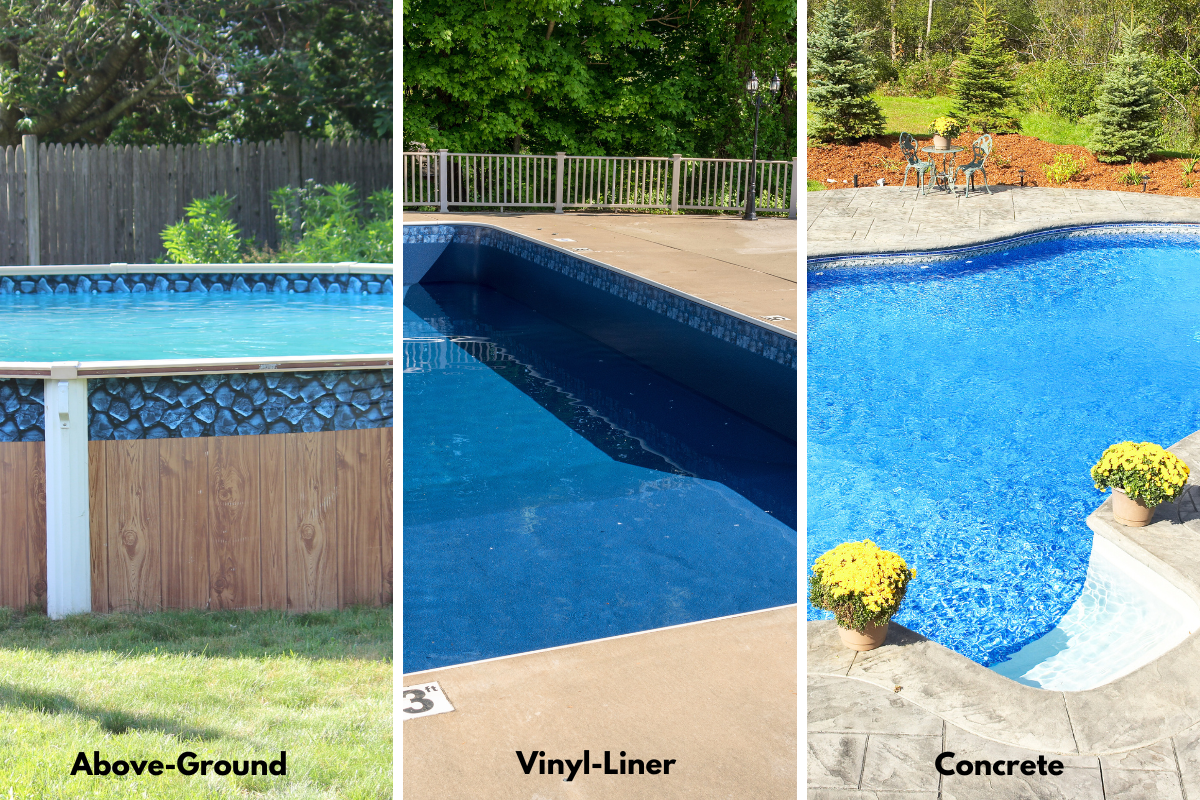
The type of pool sets most of the price. Prefabricated pools (above-ground, vinyl liner and fibreglass shells) cost less and go in faster. Concrete is built on site, so it costs more and takes longer, but you can have any shape, depth or edge you like.
| Pool type | Approximate budget | What you get |
|---|---|---|
| Above-ground pool | $5,000 to $15,000 | A prefabricated pool that sits on the ground. The cheapest and quickest option. |
| Vinyl liner pool | $10,000 to $15,000 | A frame lined with a vinyl membrane. Can be installed above ground or in the ground. |
| Plunge pool | $20,000 to $50,000 | A small, deep pool for cooling off or relaxing. Suits small yards and courtyards. |
| Fibreglass pool | $35,000 to $80,000 | A factory-made shell dropped into an excavated hole. Shapes and sizes are limited to the manufacturer's range. |
| Lap pool | $50,000 to $100,000 | A long, narrow pool for swimming laps. Suits narrow yards. |
| Concrete pool | $70,000 to $120,000+ | Designed and built on site to any shape, depth and finish. |
| Infinity pool | $80,000 to $150,000+ | A concrete pool with a vanishing edge that appears to merge with the view. |
For the fibreglass and concrete options above, budgets start higher than many basic above-ground installations. A plunge pool describes a compact pool size and use; its construction material still affects the cost.
What a Pool Quote Usually Includes
A pool installation quote normally covers design, excavation, building or placing the pool, a basic filtration system and standard finishes. Many builders also handle the building approval for you.
Items that are often left out, or quoted as extras, include:
pool fencing and gates
heating
paving, decking and landscaping around the pool
lighting, water features and upgraded filtration
removing excavated soil and dealing with rock or a difficult site
Some builders give a fully supplied-and-installed price; others leave out the pump, the fence or the electrical connection. Ask every builder to itemise their quote against the same plan so you can compare like with like.
Tip: Ask each builder what happens if they hit rock or poor soil during excavation, and how that extra work is priced. It is one of the most common reasons a pool goes over budget.
Common Upgrades & Costs
Heating, surrounds and other upgrades can add substantially to the project. The allowances below are approximate; ask for the product specification and installation to be itemised.
What would your job cost?
Get real quotes from local swimming pool & spa
Describe the job in a sentence. We'll send it to verified swimming pool & spa near you.
Free · No obligation
| Upgrade | Typical cost | What it does |
|---|---|---|
| Solar heating | $3,500 to $7,000 | Uses roof-mounted solar collectors to warm the water. Cheapest to run. |
| Gas heating | Quote for the selected heater and connections | Heats the water quickly, but costs more to run. |
| Electric heat pump | $5,000 to $10,000 | Efficient to run, with a higher upfront price. |
| Saltwater chlorinator | $1,500 to $3,000 | Makes chlorine from salt in the water, so you handle fewer chemicals. |
| Automatic cleaner | $800 to $2,500 | A robotic or suction cleaner that cuts down manual cleaning. |
| Lighting | $500 to $3,500 | LED, fibre-optic or colour-changing lights for night swimming and safety. |
| Water features | $1,500 to $8,000 | Waterfalls, fountains or jets. |
| Pool fencing | $3,000 to $10,000 | A compliant safety barrier, in glass, aluminium or steel. Required by law. |
| Decking | $5,000 to $25,000+ | Timber, composite or stone surrounds. |
| Pool covers | $500 to $15,000 | From a basic thermal blanket to an automatic retractable cover. |
A saltwater pool costs more upfront because of the chlorinator, which makes the chlorine from salt instead of you adding it by hand. For glass barriers in detail, see our glass pool fencing cost guide.
Other Cost Factors
Two pools of the same type can be quoted thousands of dollars apart. These are the usual reasons.
Size and depth. A bigger pool needs more digging, more material and more water, and costs more to heat and run.
Site and access. Sloping blocks, rock, poor soil or a high water table add excavation and engineering work. If a truck or excavator can't reach the backyard, a fibreglass shell may need a crane.
Soil removal. Excavated soil has to go somewhere, and trucking it away is often priced separately. Our excavation cost guide covers what drives that part of the job.
Finishes and features. Tiles, coping, decking, lighting and water features add up quickly.
Fencing and compliance. Every pool needs a compliant barrier, which can add $3,000 to $10,000, plus approval and inspection fees.
- Location. Local labour, transport, weather and the length of the swimming season affect both construction and heating needs. Compare businesses that work in your area.
Approvals, Pool Fencing and Registration
Check approvals, barrier requirements and inspection costs with your council or building certifier before signing. Include temporary site protection as well as the finished barrier in the plan.
Barriers and local standards
Requirements depend on the jurisdiction and the pool's age and design. Do not assume the newest published edition of an Australian Standard is the edition your local law requires. Queensland's barrier guidance, for example, calls up a standard through its own development code and explains gate, height and climbable-object requirements. Ask your certifier which rules apply to this pool.
Registration and inspections
- NSW: register the pool and meet the applicable barrier and warning-sign rules. NSW council guidance explains the register, CPR signs and barrier checks.
- Victoria: BPC guidance covers council registration, barriers and the four-year compliance inspection cycle for regulated pools and spas. Check building-permit requirements before installation.
- Queensland: check the pool register and the certificate requirements when selling or leasing. Certificate rules differ for shared and non-shared pools.
Before you dig
Ask who will obtain the free Before You Dig Australia plans and arrange any further service-location checks. Plans are a starting point for safe excavation, not permission to dig without assessing the site.
Maintenance & Longevity
Budget for servicing, water treatment, electricity and eventual repairs as well as construction. Our pool maintenance guide covers routine ownership costs.
Concrete, fibreglass and vinyl liners
Concrete offers flexibility in shape and finish, while a fibreglass shell comes in the manufacturer's available designs. A vinyl liner is a replaceable component. The time before resurfacing, gel-coat work or liner replacement depends on installation, water chemistry, exposure and maintenance; it is not one fixed interval for every pool.
Rather not lose the weekend?
Compare quotes from verified swimming pool & spa near you. Free, no obligation.
For substantial work, this guide uses broad resurfacing allowances of about $10,000 to $15,000 for concrete and $5,000 to $8,000 for fibreglass gel-coat work. The area, damage and finish can put a quote outside these ranges. Ask the contractor to distinguish surface coating, repairs and structural work.
Cracks, leaks or a damaged liner need diagnosis before a repair budget is reliable. Check the original warranty and arrange an inspection; a patch, a new finish and structural repairs are different scopes.
Filling In or Removing a Pool
If you've inherited a pool you don't use, filling it in or removing it gets rid of the running costs and the fencing. There are two ways to do it.
Partial removal (filling in). The pool is drained, the top of the walls is broken down, holes are punched in the floor so water can drain, and the hole is backfilled and compacted.
Full removal. The shell is removed and the excavation is backfilled to an agreed specification. Future building use still depends on engineering, ground conditions, compaction evidence and approval; removing the shell does not automatically make the site buildable.
The price depends on the pool's size and material (a concrete shell takes more work to break up than fibreglass), whether machinery can get into the yard, how much fill is needed, and disposal fees. If you might build over the spot later, ask whether you need an engineer to check the compaction. Some councils want to be told or to approve the work, and if your state keeps a pool register you should update it once the pool is gone. Check with your council before you book a contractor.
Hiring a Swimming Pool Builder
A pool is one of the biggest jobs you'll do on your property, so take the time to compare builders properly.
Get at least three written quotes for the same plan, with every inclusion and exclusion listed.
Check the builder's licence with your state's building regulator, and ask about their insurance and warranties.
Ask to see pools they've built, and speak to past customers if you can.
Agree a payment schedule tied to stages of the build, such as excavation, shell, and fencing and handover.
Ask who arranges the building approval, the Before You Dig enquiry and the barrier inspection.
Don't choose on price alone. A low quote that leaves out fencing, soil removal or the electrical connection can end up costing more than a higher one that includes them. Pool builders can also resurface, renovate or repair an existing pool if you're upgrading rather than starting fresh.
You can post your job on Service.com.au for free and compare quotes from verified local pool builders.