

On this page11 sections
- How much does excavation cost?
- What affects the cost of excavation?
- Site clearing, levelling and grading
- Rock excavation and trenching
- Cost of hiring a professional excavator
- Before you dig: underground services and approvals
- Asbestos and contaminated soil
- Excavation safety rules
- How to get an accurate excavation quote
- Related cost guides
- FAQs
Excavation is usually the first physical work on a build. Before a slab, pool, extension or retaining wall goes in, someone has to clear the site, dig it out to the right depth and level what's left. This guide covers what excavation costs in 2026, what pushes a quote up or down, and the safety and disposal rules to sort out before the machine arrives.
How much does excavation cost?
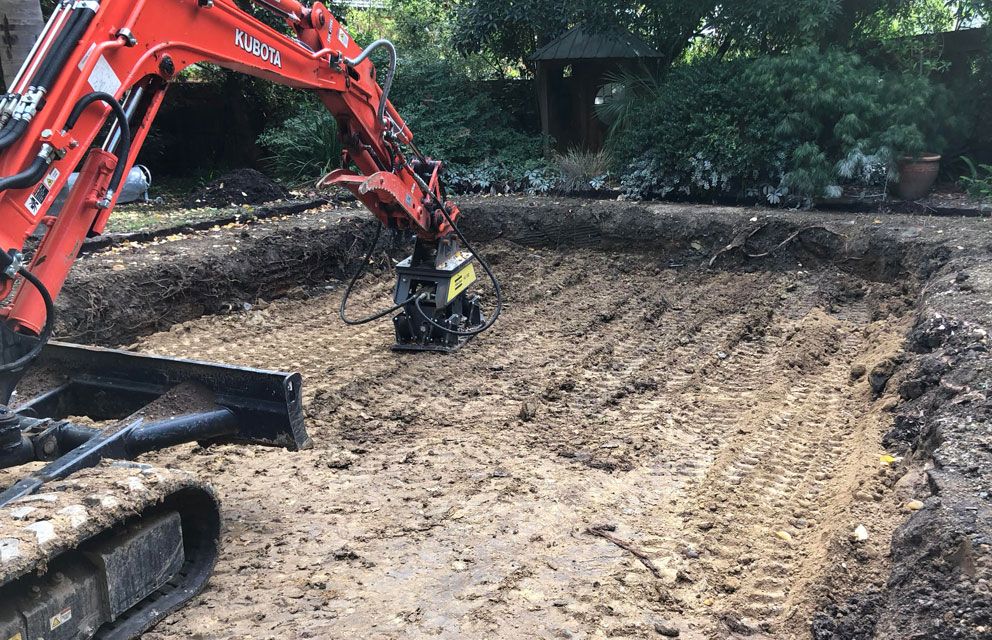
Excavation and earthmoving contractors mostly charge by the hour for a machine with an operator. Most charge about $80 to $130 an hour, with around $90 an hour as a guide for a bobcat or two-tonne excavator. Confirm the machine, operator and inclusions in the quote. A larger excavator working with a tip truck can run to about $150 an hour for the pair.
Many contractors also set a minimum charge, often a half or full day, plus a travel or float charge to bring the machine to your site. Tip fees for spoil, rock breaking and weekend work can be priced on top. Ask what is included before you compare quotes.
Bigger jobs such as a house site cut or a pool dig are often quoted as a fixed price once the contractor has walked the site. A site visit matters because nobody can judge the soil, rock or buried services from a photo.
Where a bulk dig is priced by volume, allow about $30 to $50 per cubic metre to dig soil, or about $60 to $120 per cubic metre once cartage and tip fees are included. Rock costs more per cubic metre than soil.
What affects the cost of excavation?
Two digs of the same size can be priced very differently. These are the things contractors look at:
Size and depth of the dig. More volume means more machine hours and more truck loads.
Soil and rock. Sand and loam dig quickly. Clay is slower, and rock may need a hydraulic breaker or a bigger machine.
Access. A narrow side path may limit you to a mini digger, which moves less soil per hour.
Spoil removal. Every truck load to the tip adds cartage and tip fees. Clean fill can sometimes be reused on site.
Trees, stumps and old structures. Each adds time and disposal.
Levelling and grading. Shaping the ground for drainage is extra work after the bulk dig.
Underground services and contamination. Working around pipes and cables slows the job, and asbestos or contaminated soil changes how spoil must be handled.
Site clearing, levelling and grading
Site clearing removes what is on top: scrub, trees, stumps, rubbish and old slabs or sheds. Excavation then digs the ground out to the depth the builder or engineer needs. Grading comes last and shapes the surface so it is level where it needs to be and falls away from the house where it doesn't.
Builders aim for ground that slopes away from the building so rain runs away from the footings instead of pooling against them. On a sloping block, a cut and fill (digging the high side and building up the low side) is often cheaper than carting everything away, though it may need retaining walls.
What would your job cost?
Get real quotes from local excavation & earth moving
Describe the job in a sentence. We'll send it to verified excavation & earth moving near you.
Free · No obligation
Contractors usually price clearing and levelling by the hour or as part of a fixed site preparation quote. Ask them to list clearing, digging, grading and spoil removal as separate lines so you can see where the money goes.
Rock excavation and trenching
Rock is one of the main reasons an excavation quote grows. Floating rock and boulders can often be lifted out with a larger machine. Solid rock needs a hydraulic rock breaker or a rock saw, which is slower and often charged at a higher hourly rate. If you suspect rock, ask the contractor how they will price it if they hit it, before work starts.
Trenching for drainage, stormwater, plumbing or electrical conduit is a smaller job but still priced on time, access and depth. A trench in rock or near existing services costs more because the operator has to work slowly or dig parts by hand. Some contractors use hydro (vacuum) excavation, which uses water and suction to expose services. It still needs planning, service identification and appropriate controls.
Cost of hiring a professional excavator
You can hire a contractor who brings the machine and operator, or hire an excavator and run it yourself. A mini excavator of about 1.5 to 2 tonnes usually hires for about $200 to $300 a day without an operator, plus delivery. Ask hire companies for a machine-only quote and the skills or conditions required to operate it. A machine-only rate cannot be compared directly with a contractor's machine-and-operator rate. Check minimum hire periods, delivery and pick-up charges, fuel and public holiday rates before you book.
Hiring a contractor costs more per hour but usually gets the job done faster, and brings experience in managing services and trench hazards. Agree who is arranging plans, locating and site controls before work begins. For anything deeper than a garden bed, near a house or near buried services, an experienced operator is usually the safer choice.
Before you dig: underground services and approvals
Lodge a free enquiry with Before You Dig Australia (formerly Dial Before You Dig) before any digging starts. One enquiry reaches most of the asset owners in the area, and they send back plans of their gas, water, power and telecommunications assets. The plans show what the asset owners have recorded and may not show private pipes or cables inside your boundary, so a professional locator is worth paying for on larger jobs.
Depending on the project, you may also need council approval, especially for pools, retaining walls, large cut and fill or work near boundaries. Check with your council before the dig is booked.
Rather not lose the weekend?
Compare quotes from verified excavation & earth moving near you. Free, no obligation.
Asbestos and contaminated soil
Older sites can hide broken fibro, buried building waste or other contaminated fill. If the dig turns up material that might contain asbestos, stop work and get advice. Have an asbestos professional assess the material and confirm the removal, transport and disposal arrangements with your regulator. Asbestos waste must go to a facility licensed to accept it. The rules differ between states and territories, so check with your state's work health and safety regulator or environment protection authority.
Contaminated soil costs more to remove than clean fill, and the extra cost often isn't in the original quote. Ask your contractor how they will handle it if they find it.
Excavation safety rules
Excavation work carries serious risks:
People falling into trenches or excavations
Trench walls collapsing and trapping workers
Soil, rock or equipment falling into the dig
Striking underground or overhead power lines and gas pipes
Breathing in dust or airborne contaminants
Under the model WHS framework, construction work in or near a shaft or trench deeper than 1.5 metres, or a tunnel, is high-risk construction work and needs a safe work method statement before it starts. Other hazards can also make work high risk at shallower depths, so depth alone does not decide whether a job is safe. Safe Work Australia's model Code of Practice for excavation work sets out how trenches should be supported and how services should be located. Ask any contractor how they will manage these risks on your site.
How to get an accurate excavation quote
Give every contractor the same information: the size and depth of the dig, what it is for, photos of the access, any plans from your builder or engineer and your Before You Dig plans. Ask each one to separate the dig, spoil removal, tip fees and any rock allowance, and to say what happens if they hit rock or contaminated soil.
Tip: Ask how the contractor charges for rock and for extra truck loads before you sign. Those two lines are where an excavation quote is most likely to grow once the job starts.
A quote given without a site visit is an estimate. Expect it to change once the contractor has seen the ground.
Related cost guides
Prices are a general guide in Australian dollars and vary by location, site and season.