

On this page10 sections
How much does rendering cost?
Many renderers quote by wall area. This guide uses about $30 to $50 per square metre as an approximate starting allowance, with the actual price depending on preparation, product, access and finish. Ask for a measured scope and a written total rather than assuming every wall fits the same rate.
Rendering a house
Measure the wall lengths and heights and ask the renderer how openings are allowed for. For illustration only, 400 square metres of wall multiplied by $30 to $50 gives $12,000 to $20,000 before any excluded extras. The 400 m² is a worked example, not an average house or floor area.
Rendering a single wall or feature wall
A front fence, a retaining wall or one feature wall is a much smaller job. The renderer still travels, mixes, sets up and comes back for a second coat, so some renderers set a minimum charge for small jobs. Ask whether the quote is a per-square-metre rate or a fixed price for the whole job.
How much does re-rendering cost?
Re-rendering means fixing or replacing a render coat that is already on the wall. Before quoting, a renderer will tap the walls to find drummy sections, the patches that sound hollow because the render has lifted off the brick.
Where the old render is sound, it can often be cleaned, patched and coated over. Where large areas have cracked or lifted, they have to come off back to the masonry. That removal is extra labour, plus disposal, on top of the new render. Ask for removal and patching to be priced as their own lines, so you can see what you're paying to strip the wall and what you're paying to render it.
What would your job cost?
Get real quotes from local rendering
Describe the job in a sentence. We'll send it to verified rendering near you.
Free · No obligation
What changes the price of rendering
Wall area. The biggest factor, because most quotes are built from a per-square-metre rate.
Storeys and access. A second storey or a steep block usually means scaffolding, which is quoted on top of the render itself.
Type of render. Acrylic render costs more than cement or polymer-modified render.
Surface preparation. Removing old render, cleaning painted brick or fixing cracks all add time before the first coat goes on.
Finish. Cement render is usually painted once it has cured, so budget for paint or a coloured topcoat as well.
Location. Rates differ between cities and regional areas, so compare quotes from renderers who work near you.

Types of render
The render you choose changes the price, the finish and how well the wall copes with movement.
Cement render: cement, sand and sometimes lime. It's the most common choice, but it is more prone to cracking than the modified renders below.
Polymer-modified render: cement render with polymers added, so it sticks better and resists cracking.
Acrylic render: popular because it resists cracking and dries quickly. It costs more than cement render.
Lime render: flexible and breathable, which suits older and heritage buildings.
What is rendering?
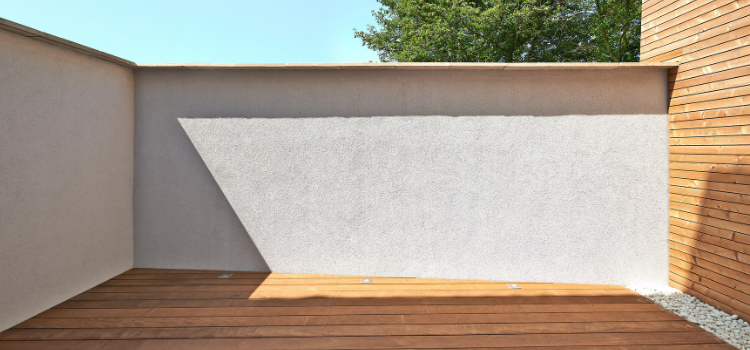
Rendering is coating external walls, usually brick or concrete, with a mix of cement, sand and lime or an acrylic compound. Most people do it for the look: render covers dated brick and gives a house a smooth, finished face. It also adds a layer between the masonry and the weather, which can help with waterproofing.
A renderer prepares the walls, mixes and applies the render, and finishes the surface. Bagging is a lighter version of the same idea: a thin coat rubbed over the brick so the shape of the bricks still shows through.
How is rendering done?
The renderer cleans the wall, repairs cracks and loose sections, and fixes beading to corners and edges. The render goes on in thin coats with a trowel, then is worked smooth with a float or sponge, depending on the surface and the finish you want.
Surface drying, curing and readiness for paint are different stages. Follow the render and coating specifications for the weather and substrate. For example, Dulux's Render Refresh instructions require new cement render to cure for four to eight weeks depending on thickness and drying conditions. Do not assume a wall that feels dry is ready to paint.
Rather not lose the weekend?
Compare quotes from verified rendering near you. Free, no obligation.

Is rendering worth it?
Rendering a whole house is a big outlay that you'll live with for years, so weigh it against what it adds to your home. A local real estate agent can tell you whether rendered homes sell for more in your street.
If the budget is tight, smaller jobs can lift the front of a house too: repainting window frames, doors and the roof, replacing the driveway or paths, new curtains or blinds, garden maintenance or landscaping. Our budget-friendly renovation ideas have more.
How to hire a renderer
Get quotes from several renderers and ask each one to price the same scope: the same walls, the same render type and the same finish. Look at photos of their past work and read their reviews.
In NSW, wet plastering includes cement-based coatings to external walls, with the relevant contractor licence required for residential work over $5,000 in labour and materials including GST. Queensland's solid plastering class covers render work; the general contractor threshold is over $3,300. Check current licence scope and status, then ask about insurance for the work.
Tip: Ask every renderer to list scaffolding, removal of old render and painting as separate lines. Then you can compare quotes line by line instead of on the total alone.